Tag: church and state

May 6, 2014
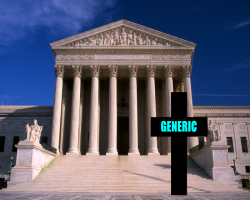
Religion in government is okay if it is generic

In a 5-4 decision on Monday, the US Supreme Court said that the Town of Greece New York could open their town council meetings with a religious prayer. The majority on the court held that legislative prayers were not unconstitutional because they were traditional acts performed at government meetings. We’ve seen this argument before, it has been called Ceremonial Deism and it means a civic religion divorced of any specific religious meaning. I would think that Christians would be very upset that the court considers their religion ‘generic’. Just because Ceremonial Deism has been a tradition doesn’t mean it isn’t harmful.

One argument the court used to rule in favor of the Town of Greece was the old argument from tradition:

April 30, 2014
Logo for Tree of Life Christian Schools

The city of Upper Arlington is a land locked suburb of Columbus Ohio. Because of a lack of room for expansion they have passed ordinances to protect their property tax base by controlling how property can be used. Tree of Life Christian Schools purchased a seven building office complex in 2010 and want to consolidate the private schools they run at the location. Schools are one of the land uses prohibited by the city. Tree of Life sued in federal court and a judge ruled that the religious school wasn’t discriminated against.

April 26, 2014
created image of A Christian Unicorn

If you spend enough time involved in the fight to maintain the separation of the church and state, you tend to see the same arguments from theists used over and over. Even though the arguments have been refuted over and over, they still use them and act like it is a way to get a checkmate against real religious freedom. One such argument is believing if only religion were put back into the schools all the problems in the world will disappear. The reality is much much different.

Something interesting I found on the Intertubes the other day gives a good example of an argument about putting religion back in the schools. It was a blog post about a book by Jeff Wallace titled “In God We Trusted”:

March 24, 2014
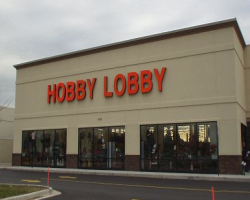
image of a Hobby Lobby storefront

The Hobby Lobby religious exemption to covering contraception case will be heard in the US Supreme Court starting on Tuesday. If corporations are given a right to religious freedom there is no telling how bad this will be for people. One bad result, that hasn’t been reported on by the media, is that both plaintiffs want to prevent Doctors from even talking about contraceptives to their employees. These corporations want to get between you and your doctor.

March 23, 2014
image of a street sign showing Church and State streets crossing

Those of us who are concerned about and study separation of church and state issues, here in the US, know that complaints by Christians about religious persecution are, for the most part, fits of fantasy by people on the right. Claims of persecution seem to increase when there are large cultural shifts like we see in acceptance of same-sex marriage. It’s always good to have a list of points showing that religious persecution of Christians is in fact a fantasy.

Rob Boston, Director of Communications at Americans United for Separation of Church and State, wrote “Taking Liberties: Why Religious Freedom Doesn’t Give You the Right to Tell Other People What to Do” where he points out how much the religious believer is favored in the US and are not persecuted:

February 25, 2014
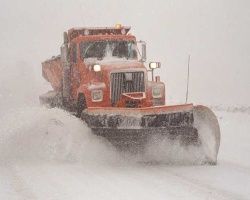
image of a snow plow moving snow

This winter has been tough for many of us. Feet of snow and frigid temperatures have gripped the US from the Midwest to the Northeast for much of the winter. Many local governments have been strained to keep the roads clear. Some elections are decided based on how elected officials handle services like plowing snow. How would taxpayers feel if their local government passed an ordinance to plow the parking lots of some local churches? One New York town, Shandaken, did just that and like most actions that support religious privilege, the town leaders don’t see the problem.